 Dota 2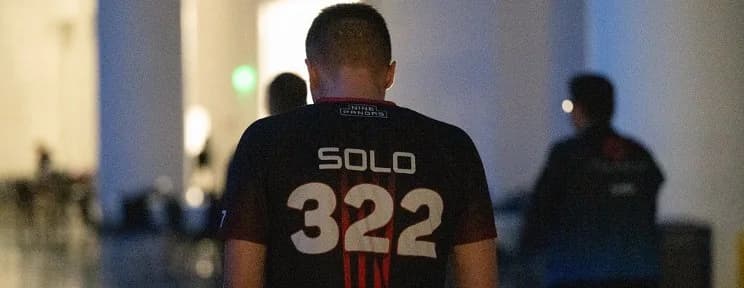
The most powerful word in Dota 2 is not a word. It is three digits. When a carry gets caught alone in the jungle for the fourth time, when a support Blinks straight into five enemies, when a stacked lineup somehow bleeds out a 20k gold lead, Twitch chat does not type "throw" or "griefing." It types 322. Every viewer knows what that means. Most of them do not remember why.
This is the full story of that number: where it came from, why it has survived thirteen years of scene turnover, and how, in August 2026, it landed directly on the roster of one of China's most iconic organisations days before The International.
Key Takeaways
322 originated on June 14, 2013, when RoX.KIS captain Alexey "Solo" Berezin placed a $100 bet on his own team to lose at odds of 3.22, netting a $322 payout.
Solo received a lifetime StarLadder ban that was quickly reduced to one year. He rebuilt his career at Virtus.pro, won multiple Majors, and remained one of the scene's most respected captains for the next decade.
The Dota 2 scene has since seen repeated match-fixing rulings: Arrow Gaming (2014), Elite Wolves (2016), Newbee (2020), Team Orca (2022), a 46-player Chinese crackdown (2023), and the Taiga case (2024).
On August 9, 2026, LGD Gaming and PGL banned 17-year-old midlaner Santiago "TaiLung" Aguero Gustavo from The International 2026, with PGL issuing a lifetime ban.
Weeks earlier, on July 14, 2026, ESIC provisionally suspended PlayTime's Oswaldo "DarkMago" Herrera and Juan "Vintage" Angulo during an integrity investigation at Esports World Cup 2026.
The number is no longer just a meme. It is an audit trail.
Where Did "322" Actually Come From?
The date is June 14, 2013. StarLadder StarSeries Season 6 group stage. Sixteen teams, round-robin format, best-of-one. RoX.KIS versus zRAGE, the final match of the day. Both teams were already eliminated. Nothing was on the line except pride, and even that was in short supply.
For ten minutes, the game looked normal. The kill score sat at 8-8. Then something broke. RoX started making decisions that made no strategic sense: single-player teleports directly into enemy formations, buybacks followed by die-backs, engagements initiated with zero angle. The gold and kill graphs bent into shapes that do not appear in normal professional Dota. Final kill score: 50-22. In favour of zRAGE.
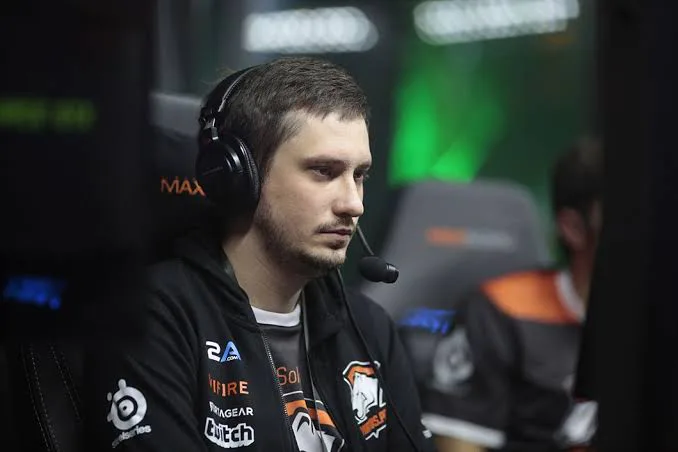
StarLadder opened an investigation within days. What they found was almost embarrassingly clean. Alexey "Solo" Berezin, RoX.KIS's captain, had wagered $100 on zRAGE to win. The odds were 3.22. If zRAGE closed the game, Solo's payout would be exactly $322. He got caught because he did the crime in public, on stage, in a tournament game that was already being streamed.
On June 16, 2013, StarLadder banned Solo from all their tournaments for life. The rest of the RoX roster received three-year bans. The organisation itself was suspended for a year. Solo admitted involvement but insisted his teammates knew nothing. Within a week, StarLadder cut Solo's ban to one year and lifted the roster's ban entirely on June 23.
Two things happened after that. Solo went on to become one of the most successful captains in Dota 2 history. And the number 322 stopped belonging to him.
Why the Number Stuck
There is a reason "322" survived and other scandal numbers did not. It is a joke and a receipt at the same time. Say "1-3-1" and you get a lane split. Say "6-slot" and you get a build. Say "322" and every Dota 2 player, coach, caster, and pub player instantly knows you are accusing someone of throwing a game for money. The etymology is embedded in the meme itself. You do not need to explain the reference. The reference explains itself.
That linguistic efficiency is what made 322 more durable than the scandal that created it. A meme is a payload. Once it enters chat, it survives every roster shuffle, patch cycle, and metagame shift, because it is a compressed factual claim wearing the costume of a joke.
Solo's Redemption: How the Original 322 Player Rebuilt a Career
If the story ended with Solo banned and disgraced, 322 would probably have faded into the same archive as Dota's other early-scene scandals. It did not, largely because Solo did not disappear.
After serving the StarLadder ban, he returned in 2014 with a rebuilt RoX.KIS, then moved to Team Empire. In 2015, at Vega Squadron, he helped engineer one of that year's biggest upsets, knocking Team Secret out at ESL One New York. In 2016, he became captain of Virtus.pro. What followed was one of the most dominant runs in CIS Dota history: multiple Major titles, deep TI campaigns, and in 2017 the first-ever Dota 2 Mercedes-Benz MVP award at ESL One Hamburg, which came with the actual car.
By 2023, at 33, he was the oldest player at The International. In July 2025 he played the Esports World Cup with Team Yandex, extending that record. His last Tier 1 appearance came late in 2025, with a couple of showmatches to close the year. He never issued a formal retirement statement. He simply became less visible.
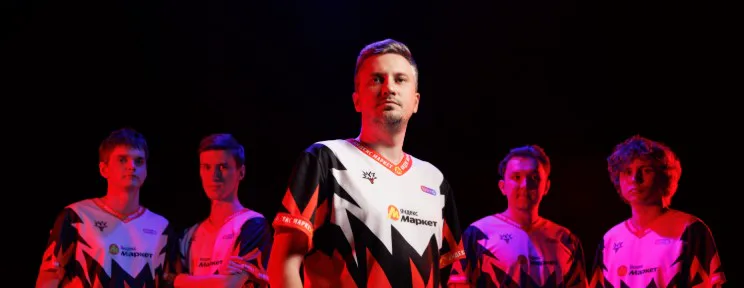
Solo has been asked about 322 in interviews for over a decade. His most quoted answer is worth reading in full:
"Nobody knew that esports would be such a big deal. So I succumbed to this little temptation and regretted it very much. It was a necessary measure at the time to continue pursuing esports because there was nothing to eat, no money, and no money for rent. Now, in esports, even low-level players can provide themselves with food and housing. Esports has grown so much."
This answer is honest and self-serving at the same time. Both things can be true. In 2013, Tier 2 Dota really was a subsistence-level career for most CIS players. That is context. It is not exoneration. The distinction matters because every match-fixing case that has followed Solo's has recycled some version of the same economic argument. The scene grew up. The excuse did not.
The Grammar of the Meme: 322, 644, 966
The number developed its own arithmetic. The community formalised a small vocabulary of multiples:
322 — a suspicious throw. Ambiguous by design; can be a joke, an accusation, or both.
644 (322 x 2) — a reverse throw. Team A throws the lead, Team B inherits it, then Team B throws it right back.
966 (322 x 3) — the holy grail: a game so chaotically bad that the lead swings three times before anyone stumbles into the win.
None of these terms are neutral. Every one of them is a mock forensic accounting of the moment. This is the tell that 322 is not really a joke, or at least not only a joke. It is a running audit of the scene, performed in real time, by fifty thousand strangers with the input latency of Twitch chat.
The Real Cases: A Timeline of Match-Fixing in Dota 2
Between 2014 and 2026, the term "322" stopped being about one incident and became a container for a recurring failure mode of professional esports. The following cases are the ones with formal rulings attached.
Arrow Gaming (2014)
The Malaysian roster Arrow Gaming became the first team to receive lifetime bans from Valve for match-fixing. This is the moment 322 stopped being a meme about Solo and started being a policy category. Valve had drawn a line. The line was low and it was not moving.
Elite Wolves (2016)
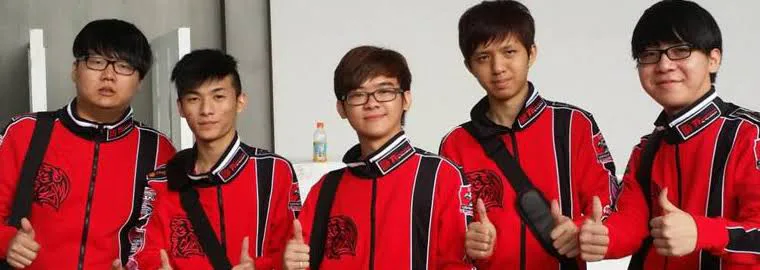
Peruvian roster Elite Wolves — Smash, Mstico, Ztok, Iwo, and VanN — were all handed lifetime Valve bans following a match-fixing investigation. The Peruvian scene, then and now, produces a disproportionate share of world-class raw mechanical talent. It has also produced a disproportionate share of the sport's integrity rulings. That geographic pattern will resurface twice more in this timeline.

Newbee (2020)
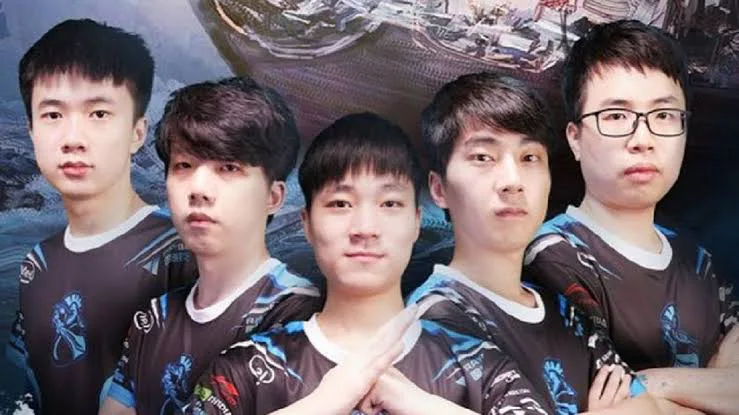
The Newbee case is the one that changed the emotional register of these stories. Newbee was not a Tier 3 side hustle. They were TI4 champions. In 2020, multiple players including TI winner Zeng "Faith" Hongda and TI runner-up Xu "Moogy" Han were caught fixing a match against Avengerls in the StarLadder ImbaTV Dota 2 Minor. All received lifetime Valve bans.
The Aegis of Champions is the sport's ultimate legitimising object. Winning it is meant to be the point at which a player has enough money, enough reputation, and enough future to make throwing a Minor match irrational under any incentive model. The fact that TI winners still got caught inside a match-fixing case in 2020 tells you something uncomfortable about the incentive structure of Tier 2 tournaments and the leverage that betting syndicates hold over players who have fallen out of the Tier 1 tent.
Team Orca (2022)
During the SEA DPC qualifiers in 2022, Team Orca fielded players from a sister roster, including well-known Malaysian pub stars vtFaded and AhJit. Ten players received Valve bans. This case sits slightly outside the pure match-fixing bucket — the mechanic here was roster fraud rather than direct betting — but it lives inside the same 322 taxonomy because the outcome was the same: matches whose results did not reflect the players advertised.
The Chinese Crackdown (2023)
In early 2023, Valve dropped a list of 46 Chinese players penalised for match-fixing or account sharing. Twenty-one received lifetime bans, including prominent names such as Flyby and FelixCiaoBa. Another 25 received indefinite bans.
This was the largest single enforcement action in Dota 2 history by headcount. It was not about one dramatic on-stream throw. It was a systemic sweep of a scene where account boosting and coordinated result manipulation had drifted into an accepted grey market. The message from Valve was structural: the number of names did not matter. The behaviour would be extinguished from the professional pool by mass exclusion.
Taiga (2024)
Former OG player Tommy "Taiga" Le faced extensive match-fixing allegations, including audio recordings and payment receipts. Taiga denied intentionally losing games but admitted to fixing First Blood outcomes and sharing insider information. The community's response was linguistically telling: "Taiga" briefly entered chat vocabulary alongside 322 as a new spam term for suspicious plays.
The Taiga case is instructive for a specific reason. It clarified that "match-fixing" is not a binary category. First Blood micro-fixes, insider information leaks to bettors, and full result manipulation are all inside the same disciplinary bucket even though they carry very different intents. ESIC's final ruling cited communications with betting-linked individuals, betting-related financial dealings, misuse of inside information, and persistent non-cooperation. The sanction was a lifetime ESIC ban.
The through-line across all six cases is this: whenever a public ruling has surfaced, it has been supported by hard artifacts — chat logs, payment trails, financial records, roster registration documents. The rumour cycle around a suspected 322 always outruns those artifacts by weeks or months. The gap between accusation and proof is where the meme culture does most of its damage.
The Psychological Warfare Layer
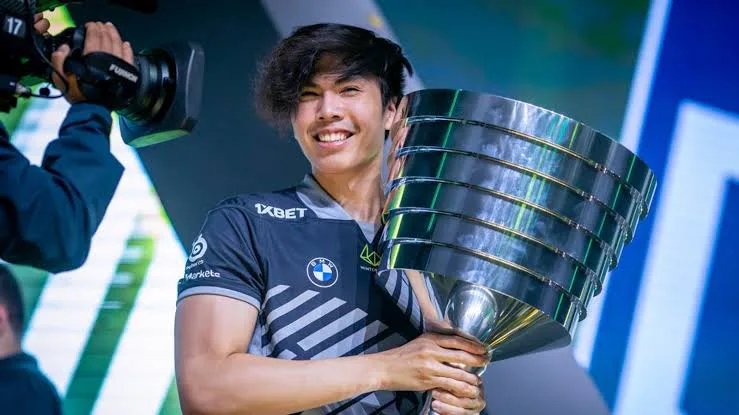
Perhaps the most disturbing thing that has emerged in the last two years is not any single case. It is the recruitment mechanic that fixers now use on Tier 2 rosters. Former OG captain and coach Mikhail "Misha" Agatov described the tactic in a March 2025 interview:
"When you play in a good team, you aren't offered to do 322, but it happens in tier 2. The classic one, which 99% of pro players share, is that they message you in DM: 'Hello, your teammate already agreed to do 322, don't you want to? Your teammate does it anyway.' You ask who exactly, and they don't respond. You start suspecting your teammates, and after this, you break and start doing 322. And then it turns out nobody did it on your team."
Read that carefully. The fixers do not need to actually convince anyone. They only need to plant simultaneous, plausible doubt in every player on the roster. Paranoia does the rest. Once one player believes the others are throwing, the marginal cost of throwing themselves collapses to zero. And then the fixers have blackmail material for the rest of that player's career.
"It's the dumbest bait," Misha said. "If you receive such a message, it's always a fucking lie."
That mechanic is important context for everything that happened in July and August 2026. Because when you read the recent TaiLung statement, you are reading something that sits directly on top of Misha's warning. Whether or not TaiLung is guilty of what he is accused of, the internal dynamic he describes — a young player feeling "singled out, pressured, and constantly under suspicion" by teammates — is precisely the environmental symptom that Misha said the fixing scheme is designed to produce.
Summer 2026: The DarkMago Suspension
The current news cycle did not begin with LGD. It began three weeks earlier, in Riyadh, at the Esports World Cup 2026.
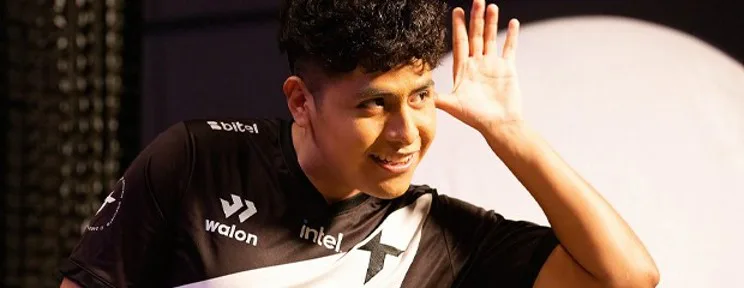
On July 14, 2026, the Esports Integrity Commission (ESIC) issued a formal statement confirming provisional suspensions against two members of the PlayTime organisation: Peruvian midlaner Oswaldo "DarkMago" Herrera and coach/sporting director Juan "Vintage" Angulo. The suspensions applied to EWC26 and all ESIC member events pending an active integrity investigation.
The order of events:
PlayTime's Survival Stage match against Vici Gaming was postponed by organisers, described only as an "integrity issue."
PlayTime later forfeited the match. Vici Gaming advanced.
ESIC issued the provisional suspensions.
PlayTime exited the tournament.
Community rumour mills reported suspicious betting activity involving the team.
Read the ESIC statement carefully. It is the correct standard. ESIC does not usually suspend a player and a sporting director/coach for vibes. But the same statement also says the measures are protective and precautionary, designed to preserve evidence and protect the event, and that no final determination of guilt has been made.
A provisional suspension is not a verdict. It is a legal pause button. Everything that has been published in the four weeks since has confirmed that pause but has not yet produced a public ruling. As of the writing of this article on August 17, 2026, the investigation is active and no final determination has been announced.
Two cautionary observations that deserve to be repeated:
No credible replay breakdown has been published showing a specific DarkMago play that cannot be explained by pressure, misread, fatigue, comms failure, draft collapse, or ordinary Dota chaos.
No public betting report, match ID analysis, leaked communications, payment trail, confession, or ruling has been released tying DarkMago or Vintage to a fixed outcome.
Which is not proof of innocence. It is proof that the case is still inside the fog where investigations legitimately live. The community's job in that fog is patience. That is not the community's strength.
August 2026: The TaiLung Ban and the LGD Fracture
Then came LGD. And LGD is not PlayTime. LGD is one of the four or five most historically important Dota 2 organisations on Earth, a top-tier Chinese org that has been at every meaningful event of the modern era.
The Ban
On August 9, 2026, LGD Gaming used their Weibo account to announce that midlaner Santiago "TaiLung" Aguero Gustavo — a 17-year-old Peruvian prodigy, born May 6, 2009 — would be barred from The International 2026 for "competitive integrity issues." PGL simultaneously issued a permanent ban across all future PGL events. LGD did not specify which of TaiLung's actions constituted the integrity issue.
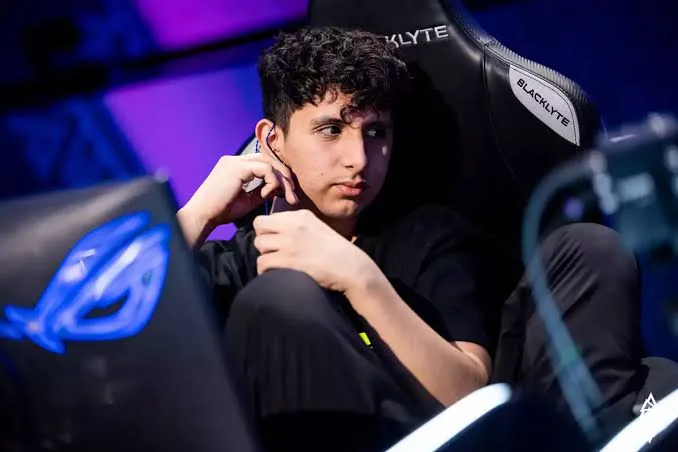
The organisation did not need to. The general consensus within the Dota 2 community landed within hours: TaiLung had been caught in a 322.
TaiLung had joined LGD in May 2026 when the Chinese org signed the entire former Heroic roster. In the three months that followed, he had finished second at BLAST SLAM VII, qualified LGD for TI 2026, and become one of the most-discussed young midlaners in the world. The ban was issued at the peak of a career and the peak of the year.
LGD replaced him with two-time TI champion Topias "Topson" Taavitsainen. That signing is itself a signal. Bringing in an all-time great two weeks before The International is what an organisation does when it is trying to salvage a roster it still believes in.
TaiLung's Statement
On August 12, 2026, TaiLung posted a lengthy statement on Facebook denying all match-fixing and betting allegations. The sequence he described, in his own account:
LGD informed the team that an account had allegedly bet between $20,000 and $40,000 on their matches.
Suspicion turned toward him. Teammates Yuma "Yuma" Langlet and Matheus "KJ" Santos Jungles Diniz confronted him.
On August 6, LGD initially told the team its review had found no suspicious activity in their matches.
On August 7, the organisation asked to inspect his phone. He agreed.
During inspection, an old Discord conversation with a friend was reportedly discovered. TaiLung said it was from a different tournament and involved jokes about money. He acknowledged that continuing the conversation was a mistake but denied it represented a betting agreement.
An unknown number then sent a message claiming to be from his mother and mentioning money. TaiLung said the number did not belong to her. Fearing the message would be used against him, he threw the phone away.
LGD asked him to voluntarily resign and withdraw from TI. He refused and requested a full investigation. He was then informed that PGL had permanently banned him.
His summary line: "In every game I played, my goal was always to win."
He called on LGD and PGL to disclose the evidence, said he is willing to have his accounts, financial records, and transactions examined, and stated that he would accept the consequences if the investigation proved his involvement in match-fixing.
The counter-evidence started arriving from inside the community almost immediately. Brazilian coach Filipe "Astini" Ribeiro posted what he described as alleged transaction records linked to matches involving TaiLung. TI-winning coach Kurtis "Aui_2000" Ling pointed to a specific play: "A couple months ago I didnt understand how malrine solo killed in slardar vs kotl mu. I guess he was 322." Aui also noted that his team had at one point attempted to determine whether TaiLung was scripting due to unusually clean Huskar toggles. Mentor Lee "SunBhie" Jeong-jae posted a similar clip.
What the TaiLung Case Actually Tells Us
Three observations, and this is where the piece takes a position.
First: The account of the phone incident, if taken at face value, is either the panicked reaction of a 17-year-old under enormous pressure or a rational attempt to destroy evidence. The problem is that both explanations are internally consistent with the same facts. That ambiguity is exactly why formal integrity processes are supposed to happen behind closed doors before public sanctions land. Something has clearly broken in that sequence at LGD, at PGL, or both.
Second: The Astini transaction document is a much heavier artifact than any single suspicious play. Replay analysis of a midlaner suspected of throwing is a genre of content Dota 2 has been producing since 2013, and it is systematically unreliable. Financial trails are the class of evidence that sinks these cases. If the Astini material holds up to formal examination, the ban will hold. If it does not, the ban is going to become a much larger story about due process in a sport that still does not have consistent integrity infrastructure.
Third: The pattern from the Misha interview matters here. A young player from a region where fixing recruitment is documented, on a Tier 1 roster with a lot of Tier 1 money moving through it, feeling isolated inside the team while an investigation runs — that is the environment where 322 recruitment historically succeeds. Whether or not it succeeded here is what the investigation is meant to determine.
What This Whole Story Actually Means
Zoom out for a moment from the timeline.
The 322 story is not really the story of Solo, or Newbee, or TaiLung, or DarkMago. It is the story of what happens when a sport grows faster than its enforcement infrastructure. Every one of these cases sits at the same intersection: a young roster (or a former great fallen out of Tier 1), operating in a Tier 2 economy where the money for legitimate play is a fraction of the money available for illegitimate play, in a scene where retail betting on individual matches remains one of the largest revenue streams and one of the least well-regulated attack surfaces.
That is a solvable problem. It has never been fully solved in traditional sports either, but traditional sports have decades of case law, formal players' unions, mandatory financial disclosure regimes, and independent integrity commissions with subpoena power. Esports has ESIC (which is doing serious work with limited leverage), Valve (which acts decisively but opaquely), and tournament organisers (whose incentives are structurally split between integrity and viewership). That is not enough infrastructure for a sport that generated the audience numbers The International 2025 pulled in.
Two structural things would materially reduce the frequency of 322 cases:
Mandatory financial disclosure for professional players at every Tier 1 event. This is standard in traditional sports and has been the single most effective deterrent against betting-related corruption. It is not currently required in Dota 2.
A dedicated, cross-region esports integrity court with real subpoena and banking-data access. ESIC is the closest existing body. It needs the resources and the mandate.
Neither of these is going to happen because Valve is at the top of the enforcement pyramid, and Valve does not build institutions. It writes patches.
Which means 322 is going to keep happening. Which means Twitch chat is going to keep typing three digits every time something looks wrong. Which means the meme is going to keep doing the work that the enforcement infrastructure is not equipped to do.
Frequently Asked Questions
What does 322 actually mean in Dota 2?
322 is Dota 2 community shorthand for match-fixing or intentional throwing. It originated on June 14, 2013, when RoX.KIS captain Alexey "Solo" Berezin placed a $100 bet against his own team at odds of 3.22, netting a $322 payout after deliberately losing to zRAGE in a StarLadder StarSeries Season 6 group stage match.
Is Solo still banned from Dota 2?
No. Solo's initial lifetime StarLadder ban was reduced to one year within days of the original ruling. His teammates were freed by June 23, 2013. Solo returned to competitive play in 2014, went on to captain Virtus.pro from 2016, won multiple Majors, took the first Dota 2 MVP award at ESL One Hamburg 2017, and competed at the Esports World Cup 2025 with Team Yandex as the oldest player at the event.
Who is TaiLung and why was he banned from TI 2026?
Santiago "TaiLung" Aguero Gustavo is a 17-year-old Peruvian midlaner who joined LGD Gaming in May 2026 as part of a signing of the former Heroic roster. On August 9, 2026, LGD and PGL banned him from The International 2026, with PGL issuing a lifetime ban across all its events, citing "competitive integrity issues." The Dota 2 community consensus is that this relates to a 322 (match-fixing) allegation, though LGD did not officially specify. TaiLung has publicly denied all match-fixing and betting allegations.
Who replaced TaiLung on LGD Gaming for TI 2026?
Two-time TI champion Topias "Topson" Taavitsainen was signed to replace TaiLung as LGD's midlaner for The International 2026.
What happened with DarkMago and PlayTime at Esports World Cup 2026?
On July 14, 2026, the Esports Integrity Commission (ESIC) provisionally suspended PlayTime's midlaner Oswaldo "DarkMago" Herrera and sporting director/coach Juan "Vintage" Angulo from Esports World Cup 2026 and all ESIC-member events pending an active integrity investigation. PlayTime forfeited its Survival Stage match against Vici Gaming and exited the tournament. As of August 17, 2026, no final ruling has been published. ESIC has stated that the measures are protective and precautionary and that no final determination of guilt has been made.
What is the difference between "322," "644," and "966"?
322 refers to a single suspicious throw. 644 (322 x 2) refers to a reverse throw, where one team throws a lead and the other team throws it right back. 966 (322 x 3) refers to a game where the lead swings three times before someone wins. All three are Dota 2 Twitch chat conventions that grew out of the original Solo scandal.
Has anyone won TI after being caught for match-fixing?
Yes, before the ban. Newbee won TI4 in 2014. In 2020, multiple Newbee players including TI winner Zeng "Faith" Hongda and TI runner-up Xu "Moogy" Han were caught fixing a match against Avengerls in the StarLadder ImbaTV Dota 2 Minor and received lifetime Valve bans. No player who has received a lifetime Valve ban for match-fixing has returned to a TI stage.